












Mumtaz Mahal Real Photo and History: What We Actually Know
If you are searching for a Mumtaz Mahal real photo, the most important answer is simple:
No authenticated photograph of Mumtaz Mahal is known to exist.
Mumtaz Mahal, whose original name was Arjumand Banu Begum, lived during the Mughal period and died in 1631. Photography was developed centuries later, so images shared online as her “real photo” should be treated carefully.

Delhi Agra one day tour by Car – Book with Local From ₹ 6,500
Delhi Agra one day tour by Car Inclusive of neat and clean Car with Experienced Driver + Local Live Guide on Additional cost – Check Out More!
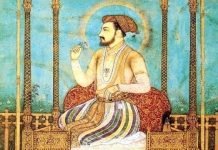
View DetailsSome historical artworks are associated with Mumtaz Mahal, but a painting, drawing or later artistic representation is not the same as an authenticated photograph.
This guide explains what is known about Mumtaz Mahal’s history, her relationship with Shah Jahan, her death and burial, and the connection between her and the Taj Mahal. It also explains why some images online are incorrectly identified as her.
Is There a Real Photo of Mumtaz Mahal?
No authenticated photograph of Mumtaz Mahal is known today.
Mumtaz Mahal died on 17 June 1631 at Burhanpur. The official Taj Mahal website identifies her as Arjumand Banu Begum and records her death and later burial at the Taj Mahal.
Because she lived in the 17th century, there cannot be a contemporary photographic record of her.
This means an image labelled “Mumtaz Mahal real photo” should not automatically be accepted as genuine.
The distinction is important:
Historical artwork ≠ photograph
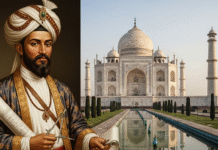
A painting may have been intended to represent Mumtaz Mahal, but it does not provide photographic evidence of her appearance.
Is the Famous Mumtaz Mahal Photo Real?
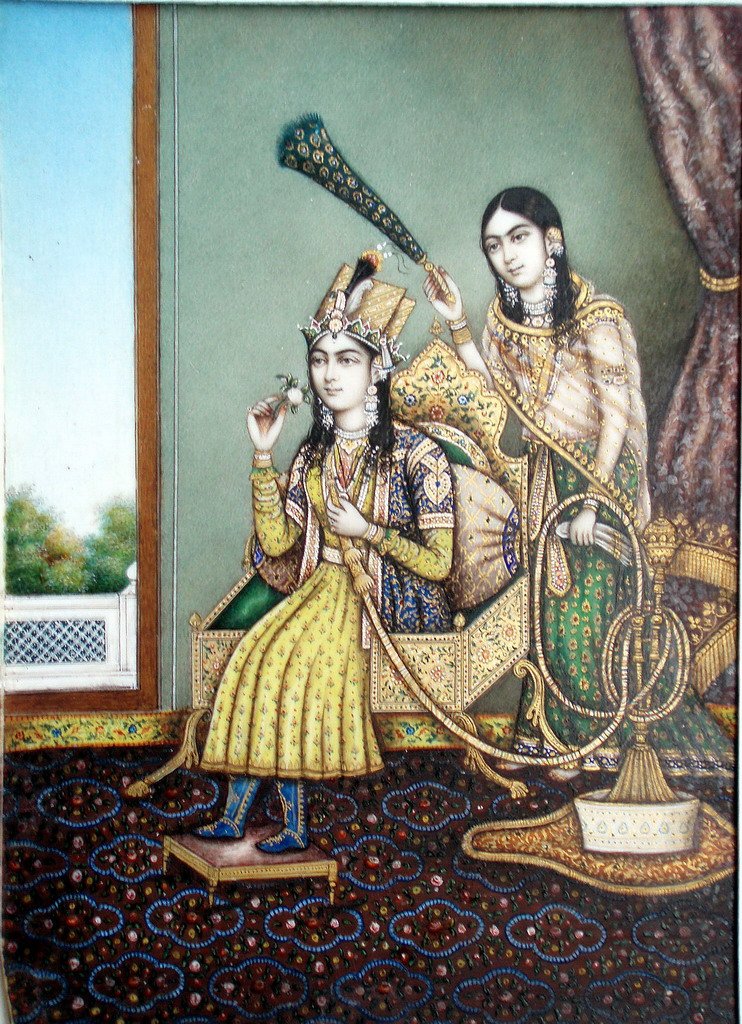
A widely circulated photograph provides a good example of why historical images need to be checked.
The photograph has appeared online with claims that it shows Mumtaz Mahal.
AFP investigated the image and traced it to the Royal Collection Trust. The woman shown was identified as Nawab Shah Jahan Begum of Bhopal, a 19th-century ruler, not Mumtaz Mahal. The photograph dates from the 19th century, long after Mumtaz Mahal’s death.
This does not prove that every historical image labelled as Mumtaz Mahal is false. It does show why an image’s original source and date matter.
When you see a supposed photograph of Mumtaz Mahal, check:
- Who identified the person?
- When was the image created?
- Where is the original held?
- Who created the image?
- Does a museum or archive provide the identification?
If those details are missing, the image should not be described as an authenticated photograph.
Did Mumtaz Mahal Have a Portrait?
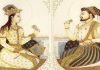
Historical artworks have been associated with Mumtaz Mahal, but individual portraits should be treated according to their documented attribution.
A useful distinction is:
“Portrait attributed to Mumtaz Mahal”
rather than:
“The exact real face of Mumtaz Mahal.”
This is especially important when an artwork’s original identity or provenance is uncertain.
Historical portraiture can provide useful cultural context, but it cannot give us the same type of evidence as a verified photograph.
Who Was Mumtaz Mahal?
Mumtaz Mahal was the title of Arjumand Banu Begum, a prominent woman of the Mughal court.
She married Prince Khurram in 1612. Khurram later became Mughal emperor Shah Jahan. The official Taj Mahal website identifies Arjumand Banu Begum as Mumtaz Mahal and records her marriage to Shah Jahan.
She became closely associated with Shah Jahan during his reign, and her death became directly connected with the creation of the Taj Mahal.
Mumtaz Mahal and Shah Jahan
Mumtaz Mahal and Shah Jahan are one of the most familiar couples in Mughal history.
Historical accounts describe Mumtaz Mahal as an important companion of Shah Jahan. The official Taj Mahal website states that she travelled with him during military campaigns and describes her as a trusted confidante.
Many later accounts have added romantic details to their story.
Those stories can be interesting, but they should not automatically be treated as documented conversations or eyewitness accounts.
For a broader historical context, see our Shah Jahan’s life and reign.
When Did Mumtaz Mahal Die?
Mumtaz Mahal died on 17 June 1631 at Burhanpur while accompanying Shah Jahan during his campaign in the Deccan.
Her body was initially buried at Burhanpur.
It was later transferred to Agra, where the Taj Mahal became her permanent mausoleum.
This is one of the most important facts for understanding the connection between Mumtaz Mahal and the Taj Mahal.
Where Is Mumtaz Mahal Buried?
Mumtaz Mahal is buried in the Taj Mahal complex in Agra, Uttar Pradesh.
Inside the central chamber is her decorative cenotaph. The actual burial is at a lower level beneath the cenotaph. Shah Jahan’s cenotaph was later placed beside hers.
The official Taj Mahal website records the epitaph of Mumtaz Mahal as Arjumand Banu Begam, titled Mumtaz Mahal, who died in 1631.
Why Was the Taj Mahal Built for Mumtaz Mahal?
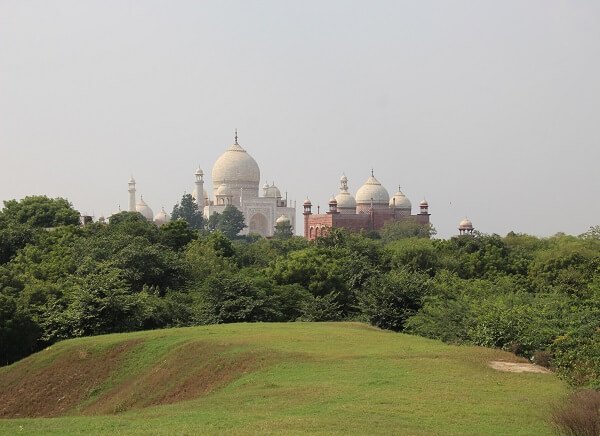
Shah Jahan commissioned the Taj Mahal as a mausoleum for Mumtaz Mahal.
The monument was developed as a large architectural complex rather than simply a single tomb. It includes the central mausoleum, gardens and other buildings.
According to the official Taj Mahal website, construction of the complex began around 1631, the principal mausoleum was completed in 1648, and additional parts of the complex were completed later.
The monument developed from earlier Persian and Mughal architectural traditions.
For a wider explanation of the monument’s development, read our Taj Mahal history and its Mughal background.
What Is Inside Mumtaz Mahal’s Tomb?
The central chamber contains the decorative cenotaphs of Mumtaz Mahal and Shah Jahan.
Mumtaz Mahal’s cenotaph was created first. Shah Jahan’s cenotaph was added after his death in 1666. The actual graves are located at a lower level.
The chamber also contains detailed marble screens, calligraphy and decorative stonework.
These features are important parts of the Taj Mahal’s architectural design rather than simply decoration added for visual effect.
Mumtaz Mahal’s Family
Mumtaz Mahal and Shah Jahan had several children who became important figures in Mughal history.
Among the best-known were:
- Jahanara Begum
- Dara Shikoh
- Shah Shuja
- Roshanara Begum
- Aurangzeb
- Murad Baksh
- Gauhara Begum
Historical sources differ in some details concerning the Mughal royal family. For that reason, it is better to avoid unnecessary claims when the exact detail does not affect the main subject.
To explore the family connection further, read our Mumtaz Mahal’s sons and their Mughal history.
The Four Promises: Fact or Traditional Story?
One popular story says that Mumtaz Mahal made four promises or requests to Shah Jahan before her death.
This story is repeated in popular descriptions of the Taj Mahal, including on the official Taj Mahal website.
However, it should be presented as a traditional account, not as a verified transcript of a private conversation.
A trustworthy historical article should make this distinction clear.
The same principle applies to other dramatic stories about the couple.
Was It Love at First Sight?
Stories about Shah Jahan and Mumtaz Mahal often describe their relationship in highly romantic terms.
The marriage and Shah Jahan’s later commissioning of the Taj Mahal are historical facts.
However, detailed stories about their first meeting, exact conversations or private feelings should not be presented as established fact unless they are supported by reliable historical evidence.
There is no need to invent dialogue or exaggerate their relationship to explain why the Taj Mahal is associated with Mumtaz Mahal.
What Did Mumtaz Mahal Really Look Like?
This question cannot be answered with photographic certainty.
There is no authenticated photograph that allows us to compare Mumtaz Mahal’s actual appearance with modern images.
Historical artworks may provide representations, but they should be described according to their evidence and attribution.
Therefore, claims such as:
“This is Mumtaz Mahal’s exact face.”
should be treated cautiously unless the image has strong historical documentation.
How to Check a Mumtaz Mahal Image
If you find an image labelled as Mumtaz Mahal, use these basic checks.
1. Check the date
A photograph must have been created after photography became available.
An image dated centuries after Mumtaz Mahal’s death obviously cannot be a photograph of her.
2. Check the original collection
Look for a museum, archive, library or established historical collection.
3. Identify the medium
Find out whether the image is:
- A photograph
- A painting
- A drawing
- An engraving
- A modern illustration
4. Check the attribution
Look for information about who the person is and how that identification was made.
5. Check the original source
A photograph being repeated across hundreds of websites does not make its caption accurate.
The documented source matters more than the number of websites using the image.
Why Are Fake Mumtaz Mahal Photos Shared Online?
The search for a Mumtaz Mahal real photo is understandable.
People naturally want to know what the woman behind the Taj Mahal looked like.
However, historical images can become mislabelled when they are copied without their original captions or sources.
The viral photograph discussed earlier is a good example. AFP traced it to the Royal Collection Trust and identified the subject as Nawab Shah Jahan Begum of Bhopal.
This is why historical image verification is important.
Mumtaz Mahal and Taj Mahal Architecture
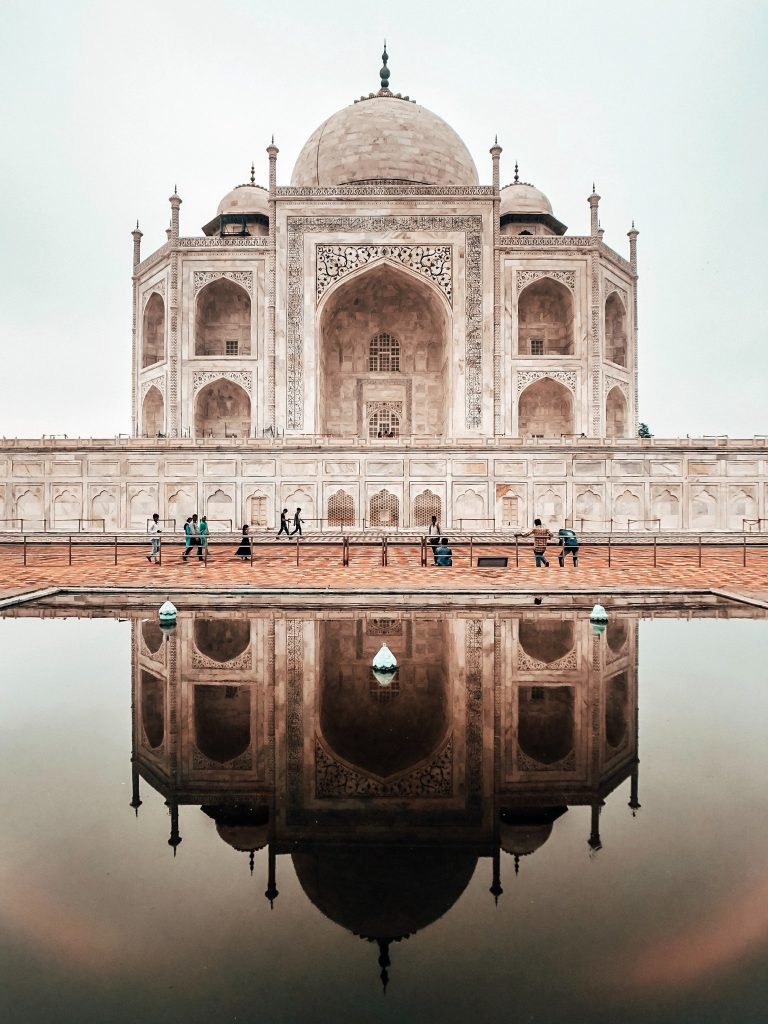
The Taj Mahal represents more than the personal story of Mumtaz Mahal and Shah Jahan.
Its design developed from Persian and earlier Mughal architectural traditions, with influences from the wider architectural culture of the Mughal Empire.
The complex includes:
- The main marble mausoleum
- A large garden
- A mosque
- A matching guest building
- Entrance structures
- Decorative marble and stonework
The central tomb is particularly notable for its symmetry, marble work, calligraphy and decorative details.
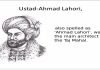
To explore the architectural side, see our Ustad Ahmad Lahori and Taj Mahal architecture.
Mumtaz Mahal and Agra
Agra is central to Mumtaz Mahal’s story because the Taj Mahal was built there as her mausoleum.
The city also contains other important Mughal sites, making it possible to understand the Taj Mahal within a broader historical setting.
If you are planning a visit, our Agra sightseeing and travel planning guide can help you explore the city beyond the Taj Mahal.
Photographing the Taj Mahal Today
There is an important difference between a historical photograph of Mumtaz Mahal and modern photographs of the Taj Mahal.
No authenticated photograph of Mumtaz Mahal is known.
The Taj Mahal itself, however, can be photographed from several areas around the monument, subject to current visitor rules and access restrictions.
For practical photography ideas, see our Taj Mahal photography tips and viewpoints.
Mumtaz Mahal Facts at a Glance
| Question | Answer |
|---|---|
| Original name | Arjumand Banu Begum |
| Known as | Mumtaz Mahal |
| Husband | Shah Jahan |
| Marriage | 1612 |
| Death | 17 June 1631 |
| Place of death | Burhanpur |
| Mausoleum | Taj Mahal, Agra |
| Authenticated photograph known? | No |
| Historical representations? | Some artworks are attributed to or identified as Mumtaz Mahal |
The core biographical details are supported by the official Taj Mahal historical information.
Frequently Asked Questions
Is there a real photo of Mumtaz Mahal?
No authenticated photograph of Mumtaz Mahal is known to exist. She died in 1631, centuries before photography. Images presented online as her real photograph should therefore be checked against their original source.
What was Mumtaz Mahal’s real name?
Her name was Arjumand Banu Begum.
Who was Mumtaz Mahal’s husband?
She married Prince Khurram, who later became Mughal emperor Shah Jahan.
When did Mumtaz Mahal die?
Mumtaz Mahal died on 17 June 1631 at Burhanpur.
Where is Mumtaz Mahal buried?
Her mausoleum is the Taj Mahal in Agra. Her decorative cenotaph is inside the main tomb chamber, while the actual burial is below.
Why was the Taj Mahal built?
Shah Jahan commissioned the Taj Mahal as a mausoleum for Mumtaz Mahal. Construction of the complex began around 1631.
Is the famous viral photo really Mumtaz Mahal?
No. AFP traced one widely circulated photograph to the Royal Collection Trust and identified the woman as Nawab Shah Jahan Begum of Bhopal.
Did Mumtaz Mahal have a real portrait?
Some artworks have been attributed to or identified as representations of Mumtaz Mahal, but they should not automatically be treated as exact photographic likenesses.
Did Mumtaz Mahal make four promises to Shah Jahan?
The four-promises story is a traditional account associated with the Taj Mahal. It should not be presented as a verified private conversation without supporting historical evidence.
What did Mumtaz Mahal look like?
Her exact appearance cannot be established from an authenticated photograph. Historical representations may provide clues or artistic interpretations, but they should be treated according to their documented attribution.
Final Answer: Does Mumtaz Mahal Have a Real Photo?
No authenticated photograph of Mumtaz Mahal is known to exist.
Mumtaz Mahal was Arjumand Banu Begum, the wife of Shah Jahan. She died at Burhanpur in 1631, and her remains were later placed in the Taj Mahal at Agra.
Some images online have been incorrectly labelled as her photograph. One widely circulated example was identified by AFP as Nawab Shah Jahan Begum of Bhopal, not Mumtaz Mahal.
So the most accurate answer to “Mumtaz Mahal real photo and history” is not to present an unverified image as authentic.
Instead, separate the evidence into three categories:
Documented history: Mumtaz Mahal’s life, marriage, death and connection with the Taj Mahal.
Historical representation: Paintings or artworks attributed to or identified as Mumtaz Mahal.
Traditional stories: Popular accounts that should not automatically be treated as documented facts.
That approach provides a clearer and more trustworthy understanding of Mumtaz Mahal and her connection with the Taj Mahal.