
















Who Was Arjumand Banu Begum? The Story of Mumtaz Mahal
If you are planning a trip to India and the Taj Mahal in Agra is on your itinerary, you will probably hear the name Mumtaz Mahal.
But Mumtaz Mahal was not the name she was born with.
She was Arjumand Banu Begum, a woman from a prominent family connected with the Mughal court. She married Prince Khurram, who later became Mughal emperor Shah Jahan, and became an important member of the imperial household.


Delhi Agra one day tour by Car – Book with Local From ₹ 6,500
Delhi Agra one day tour by Car Inclusive of neat and clean Car with Experienced Driver + Local Live Guide on Additional cost – Check Out More!
View DetailsShe died in 1631 at Burhanpur while accompanying Shah Jahan during his Deccan campaign. After her death, Shah Jahan commissioned the mausoleum in Agra that became the Taj Mahal.
This guide explains who Arjumand Banu Begum was, how she became known as Mumtaz Mahal, her family and marriage, what is known about her life, and why her story matters when you visit Agra.
Arjumand Banu Begum and Mumtaz Mahal: Are They the Same Person?
Yes.
Arjumand Banu Begum was the woman who became known as Mumtaz Mahal.
This is one of the easiest points to remember when researching the Taj Mahal:
- Arjumand Banu Begum — her personal name
- Mumtaz Mahal — the title by which she became widely known
- Mumtaz Mahal of the Taj Mahal — the same historical person
So if you see different sources using either name, they are referring to the same woman.
The official Taj Mahal website identifies Mumtaz Mahal’s full name as Arjumand Banu Begum.
Who Was Arjumand Banu Begum?
Arjumand Banu Begum belonged to a prominent Persian-origin family associated with the Mughal court.
Her father was Asaf Khan, an influential Mughal nobleman. Her family was therefore already connected to the political and social world of the Mughal Empire before her marriage to Prince Khurram.
Some historical sources differ over certain details of her early life. For that reason, it is better for a trustworthy travel guide to avoid presenting disputed details as absolute facts.
What is clear is that Arjumand grew up within the Mughal aristocratic environment and later became closely connected with the future emperor Shah Jahan.
Arjumand Banu Begum and Prince Khurram
Arjumand’s history is closely connected with Prince Khurram, the future Shah Jahan.
According to the official Taj Mahal website, the couple were betrothed in 1607 and married in 1612.
This distinction matters because some online articles incorrectly describe 1607 as their marriage year.
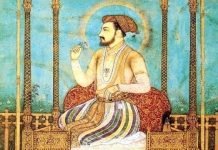
Prince Khurram later became the fifth Mughal emperor and took the name Shah Jahan.
When Did Arjumand Become Mumtaz Mahal?
After her marriage and Shah Jahan’s accession to the throne, Arjumand became known as Mumtaz Mahal.
The title became the name by which she is now remembered around the world, particularly because of her connection with the Taj Mahal.
For a visitor, the simplest way to remember it is:
Arjumand Banu Begum was Mumtaz Mahal, the wife of Shah Jahan for whom the Taj Mahal was commissioned.
Mumtaz Mahal’s Family
Shah Jahan and Mumtaz Mahal had a large family. Historical accounts commonly identify 14 children, although not all survived childhood.
Among their better-known children were:
- Jahanara Begum
- Dara Shikoh
- Shah Shuja
- Roshanara Begum
- Aurangzeb
- Murad Baksh
- Gauharara Begum
Several of their children later became important figures in Mughal history, particularly during the succession struggle after Shah Jahan’s reign.
The family story is therefore an important part of understanding the Mughal period beyond the Taj Mahal itself.
What Was Mumtaz Mahal’s Role at the Mughal Court?
Mumtaz Mahal was an important member of Shah Jahan’s imperial household and accompanied him during parts of his travels and military campaigns. The official Taj Mahal account describes her as a close companion of Shah Jahan.
However, it is better not to exaggerate her role.
You may find websites describing her as a formal political adviser or administrator, but such descriptions should be supported by specific historical evidence.
For this article, the safest wording is that Mumtaz Mahal held an important position within the imperial household and was closely connected to Shah Jahan.
That gives readers useful historical context without turning uncertain claims into facts.

Shah Jahan and Mumtaz Mahal
The relationship between Shah Jahan and Mumtaz Mahal has become one of the most famous stories associated with the Taj Mahal.
There is clear historical evidence that Mumtaz Mahal was important to Shah Jahan and that her death was followed by the commissioning of her mausoleum.
But many detailed stories about their relationship have also become part of popular Taj Mahal storytelling.
For a trustworthy travel guide, it is better to distinguish between what historical sources establish and what may be later tradition.
The central sequence is straightforward:
Mumtaz Mahal died in 1631 → Shah Jahan commissioned a mausoleum for her → the Taj Mahal complex was developed in Agra.
The Death of Mumtaz Mahal
Mumtaz Mahal died on 17 June 1631 at Burhanpur, in present-day Madhya Pradesh, while accompanying Shah Jahan during his Deccan campaign.
Her body was initially buried at Burhanpur.
It was later transferred to Agra, where Shah Jahan commissioned the large mausoleum that became the Taj Mahal.
This is the most important event connecting Arjumand Banu Begum’s life with the monument that millions of travelers visit today.
Why Did Shah Jahan Commission the Taj Mahal?
After Mumtaz Mahal’s death, Shah Jahan commissioned a mausoleum for her in Agra.
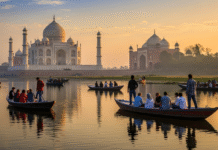
The Taj Mahal was not simply a single white marble building. It developed into a large funerary complex consisting of the principal mausoleum, garden, mosque, guest building, gateway and other structures.
The official Taj Mahal website says construction of the complex began around 1631, with the principal mausoleum completed in 1648 and the surrounding buildings and gardens completed later.
The most accurate description is therefore:
Shah Jahan commissioned the Taj Mahal as Mumtaz Mahal’s mausoleum.
Did Shah Jahan Personally Build the Taj Mahal?
No.
Shah Jahan was the emperor who commissioned the project, rather than the person who physically constructed the monument.
The Taj Mahal was a large imperial building project involving architects, craftsmen and other specialists. The official Taj Mahal website describes the construction as being entrusted to a board of architects.
Was the Taj Mahal Only a Love Story?
The Taj Mahal is frequently described as a monument of love, and Shah Jahan’s connection with Mumtaz Mahal is an important part of its history.
But a serious historical article should go beyond the romantic description.
The Taj Mahal was also a Mughal imperial funerary complex, shaped by the architectural traditions of the period. Its design incorporates Persian, Indian and Islamic architectural influences and reflects the sophisticated building culture of Shah Jahan’s reign.
So when you visit, you are seeing both:
a mausoleum connected with Mumtaz Mahal
and
an important work of Mughal architecture.
That wider context makes the monument much more interesting.

What About the Famous Stories About Mumtaz Mahal?
The Taj Mahal has accumulated many stories over the centuries.
Some are supported by historical sources, while others are legends or later interpretations.
For example, you may encounter stories about:
- Shah Jahan’s hair turning white immediately after her death
- specific promises supposedly made by Mumtaz Mahal
- a planned “Black Taj Mahal”
- dramatic details about the construction workers
- claims that Shah Jahan personally designed every part of the monument
These stories should not automatically be presented as historical facts.
A trustworthy travel guide should clearly separate documented history from popular tradition.
For this reason, I would leave such stories out of the main biography unless there is a strong reason to discuss them as legends or historical debates.
Is There a Real Photograph of Mumtaz Mahal?
No.
Mumtaz Mahal lived in the 17th century, long before photography existed.
Therefore, an image described as a “real photograph of Mumtaz Mahal” is misleading.
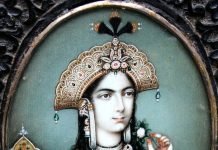
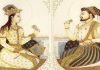
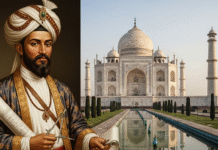
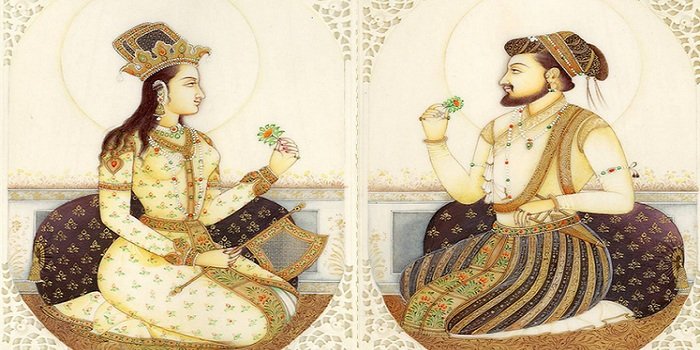
Historical paintings, illustrations and modern artistic reconstructions can be used to help readers visualize the period, but they should be clearly labeled as artistic representations.
Important website correction
If your current page has an image or heading saying “Arjumand Banu Begum real photo”, change it.
A better caption would be:
Artistic representation of Mumtaz Mahal (Arjumand Banu Begum)
provided the image is actually an artistic representation.
This is a small change, but it makes a big difference to the credibility of the page.
Where Is Mumtaz Mahal Buried?
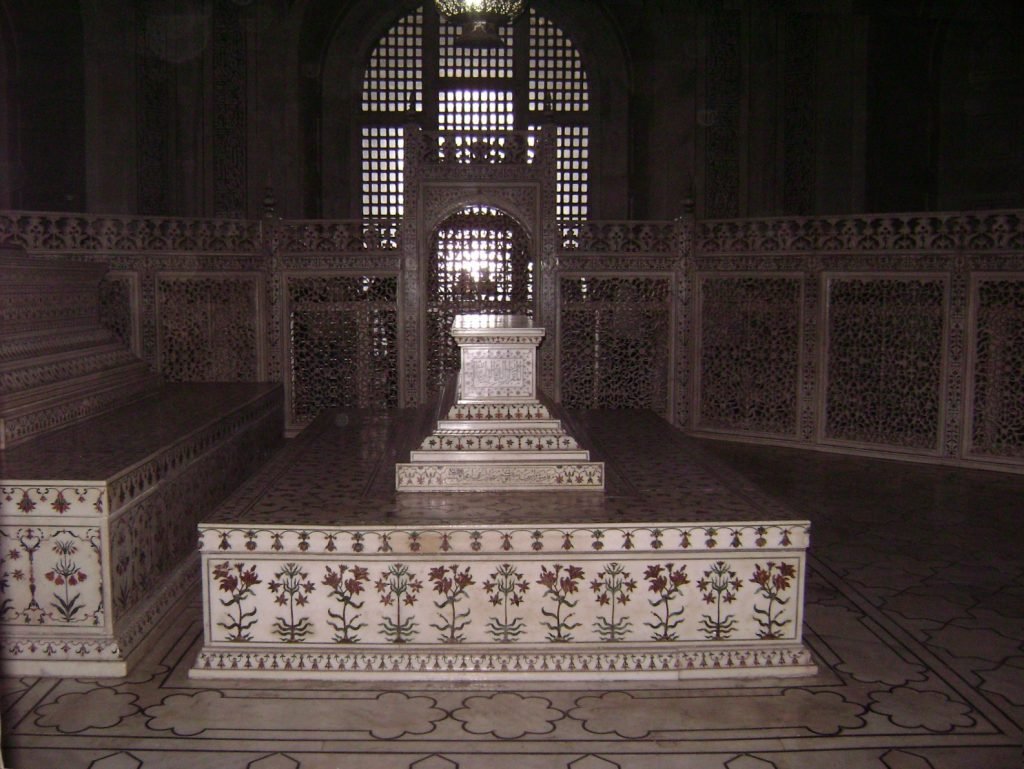
Mumtaz Mahal is buried inside the Taj Mahal in Agra.
Her cenotaph occupies the central position in the main interior chamber.
Shah Jahan was later buried beside her after his death in 1666. The official Taj Mahal information identifies both Arjumand Banu Begum and Shah Jahan as being buried in the Taj Mahal.
This creates an interesting detail for visitors:
The monument commissioned for Mumtaz Mahal eventually became the burial place of Shah Jahan as well.
Arjumand Banu Begum and the Taj Mahal: The Connection
If you’re planning to visit the Taj Mahal, remember this simple history:
Arjumand Banu Begum
↓
became known as Mumtaz Mahal
↓
married Prince Khurram
↓
he became Shah Jahan
↓
Mumtaz Mahal died in 1631
↓
Shah Jahan commissioned her mausoleum in Agra
↓
the Taj Mahal became her final resting place.
That is the basic historical connection behind the monument.
Why Her Story Matters When You Visit Agra
If you’re visiting India for the first time, you don’t need to become an expert in Mughal history before seeing the Taj Mahal.
But knowing a little about Mumtaz Mahal can change how you experience the monument.
You are not simply looking at a famous white marble building.
You are seeing a place connected with:
- Arjumand Banu Begum
- Mumtaz Mahal
- Shah Jahan
- The Mughal Empire
- 17th-century Mughal architecture
- Agra’s role in imperial history
And there is more to Mughal Agra than the Taj Mahal.
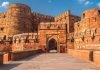
Agra Fort is another major historical site worth considering if you want to understand the Mughal rulers and their connection with the city.
For practical planning, continue to your Agra travel guide.

What to See in Agra After Learning About Mumtaz Mahal
If you’re interested in the history behind the Taj Mahal, you can build a broader Agra itinerary around Mughal heritage.
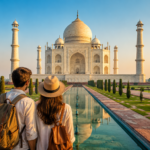
Taj Mahal
The mausoleum commissioned by Shah Jahan for Mumtaz Mahal.
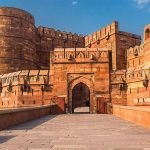
Agra Fort
A major Mughal fort and palace complex that provides additional context for the rulers who lived and governed in Agra.
Mehtab Bagh
A garden on the opposite side of the Yamuna River that provides a different view toward the Taj Mahal.
You don’t need to visit every attraction to understand the story. Even combining the Taj Mahal and Agra Fort can give a first-time visitor a much broader picture of Mughal Agra.
Arjumand Banu Begum Timeline
Early 1590s — Arjumand Banu Begum is born into a prominent family connected with the Mughal court.
1607 — Arjumand and Prince Khurram are betrothed.
1612 — They marry.
1628 — Prince Khurram becomes Mughal emperor as Shah Jahan.
1631 — Mumtaz Mahal dies at Burhanpur.
Early 1630s — Work begins on her mausoleum in Agra.
1648 — The principal mausoleum is completed, according to the official Taj Mahal website.
1666 — Shah Jahan dies in Agra and is buried beside Mumtaz Mahal.
Frequently Asked Questions
Who was Arjumand Banu Begum?
Arjumand Banu Begum was the woman who became known as Mumtaz Mahal and was the wife of Mughal emperor Shah Jahan.
Is Arjumand Banu Begum the same person as Mumtaz Mahal?
Yes. They are two names for the same historical person.
When did Arjumand Banu Begum marry Shah Jahan?
She was betrothed to Prince Khurram in 1607 and married him in 1612.
When did Mumtaz Mahal die?
She died on 17 June 1631 at Burhanpur.
How many children did Mumtaz Mahal have?
Historical accounts commonly identify 14 children of Shah Jahan and Mumtaz Mahal.
Why is Mumtaz Mahal famous?
She is best known as the wife of Shah Jahan and the woman for whom he commissioned the Taj Mahal after her death.
Did Shah Jahan personally build the Taj Mahal?
No. He commissioned the monument; its construction involved architects, craftsmen and other specialists.
Is there a real photograph of Mumtaz Mahal?
No. Photography did not exist during her lifetime. Any supposed “real photograph” should not be presented as authentic.
Where is Mumtaz Mahal buried?
She is buried inside the Taj Mahal in Agra.
Planning a Taj Mahal Visit?
Once you know the history, you can move on to the practical side of your trip.
Before visiting, check current information about:
- Taj Mahal entry tickets
- Visiting arrangements
- Friday closure
- Security restrictions
- Transportation
- How much time you want to spend in Agra
For tickets and entry information, see your Taj Mahal ticket and visitor guide.
For planning your wider stay, see the Agra travel guide.
If photography is important to you, you can also link naturally to your Taj Mahal photography guide.
Final Thoughts
Arjumand Banu Begum’s story helps explain the person behind the name Mumtaz Mahal and the historical connection between her and the Taj Mahal.
She came from a prominent Mughal-era family, married Prince Khurram, became known as Mumtaz Mahal, and died at Burhanpur in 1631 while accompanying Shah Jahan.
After her death, Shah Jahan commissioned the mausoleum that became the Taj Mahal.
For a traveler visiting Agra, that is the essential story to know.
The Taj Mahal is more than a famous photograph. It is a monument connected with a woman named Arjumand Banu Begum, an emperor named Shah Jahan, and the wider history of the Mughal Empire.
Once you understand that background, your visit to the Taj Mahal can become much more than sightseeing.