










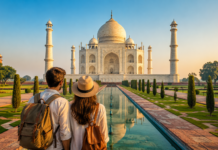


Taj Mahal Photography: Practical Tips, Photo Locations & Visitor Rules
Photographing the Taj Mahal is a natural part of an Agra visit. The monument looks different depending on your position, the available light and the surrounding architecture.
You do not need expensive camera equipment to document your visit. A smartphone can be enough for many travel photographs if you pay attention to framing, light and the surroundings.
The more important part is planning your visit properly: know where photography is practical, understand the current monument rules and allow enough time to enjoy the site rather than rushing from one photograph to another.

Delhi Agra one day tour by Car – Book with Local From ₹ 6,500
Delhi Agra one day tour by Car Inclusive of neat and clean Car with Experienced Driver + Local Live Guide on Additional cost – Check Out More!
View DetailsAs an Agra guide, I help visitors understand the city’s historic places and organise sightseeing according to their available time. This article focuses specifically on Taj Mahal photography.
Important: Monument rules, visitor procedures and access arrangements can change. Check the latest official information before your visit.
Taj Mahal Photography at a Glance
| Question | Practical answer |
|---|---|
| Can visitors take photographs? | Photography is permitted subject to current monument rules. |
| Is a smartphone suitable? | Yes, for ordinary travel photography. |
| Is a professional camera necessary? | No. |
| Can you use a tripod? | Do not assume it is permitted; additional equipment may require authorization. |
| Can you photograph architectural details? | Yes, where photography is permitted. |
| Can you take personal portraits? | Yes, while following visitor rules and respecting other visitors. |
| Is photography permitted everywhere? | Follow the specific instructions applying to each area. |
The Archaeological Survey of India states that photography is permitted at protected monuments, while camera stands, additional lighting and similar equipment require authorization.
Where to Photograph the Taj Mahal
The Taj Mahal complex offers more than one possible composition.
Most visitors begin with the familiar frontal view, but changing your position can produce noticeably different photographs.
During your visit, look for opportunities to photograph:
- The monument through the main gateway
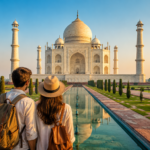
- The Taj Mahal from the central garden
- The marble exterior
- Decorative inlay
- Arches and architectural details
- Domes and minarets
- The surrounding garden
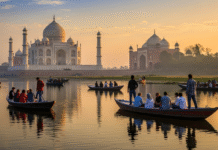
- Reflections where conditions allow
You do not need to photograph every feature. Choose a few compositions that show the monument from different perspectives.

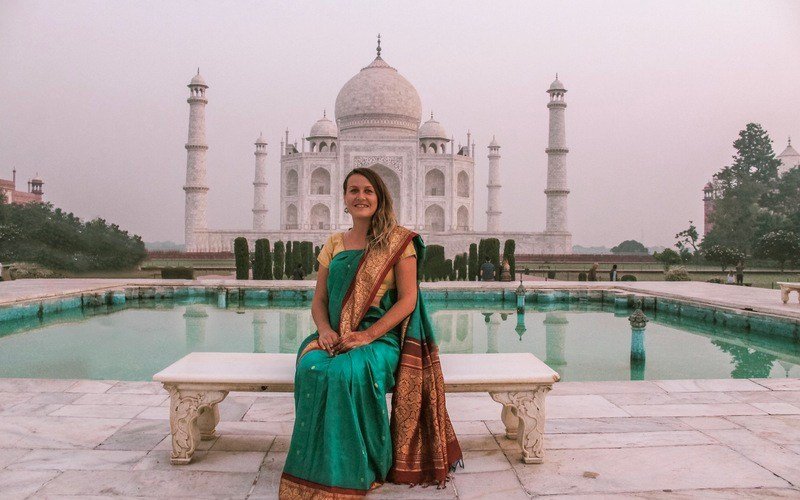
1. Photograph Through the Main Gateway
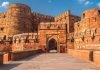
The main entrance provides a natural architectural frame for the Taj Mahal.
Instead of immediately taking the standard front-facing photograph, pause at the gateway and look at how the opening changes the composition.
You can experiment with:
- A wide view showing the gateway and monument
- A more tightly framed view
- Symmetrical composition
- Architectural details around the entrance
This approach gives you a photograph that includes more context than a simple close view of the mausoleum.
2. Use the Central Garden for Symmetry
The central garden provides one of the most recognisable approaches to the Taj Mahal.
The layout naturally encourages symmetry.
For a straightforward composition:
- Position yourself where the central axis is clear.
- Keep the Taj Mahal near the centre of the frame.
- Include some of the garden if you want to show scale.
- Check the edges of your frame for distractions.
- Take both a wider photograph and a closer composition.
You can also move slightly rather than taking every photograph from exactly the same position.
3. Look Beyond the Main Photograph
The Taj Mahal is often photographed as a complete building, but smaller details can tell another part of the story.
Look for:
- Marble inlay
- Floral decoration
- Geometric patterns
- Arched entrances
- Calligraphic elements
- Carved marble details
- Architectural symmetry
These photographs can complement your wider images and create a more varied record of your visit.
4. Photograph the Taj Mahal From Mehtab Bagh
Mehtab Bagh is located across the Yamuna from the Taj Mahal and provides a different perspective from the main monument complex.
Instead of photographing the Taj Mahal from within the garden, you can photograph it from the opposite side of the river.
The Archaeological Survey of India lists Mehtab Bagh among the monuments under its Agra Circle.
If you plan to visit Mehtab Bagh specifically for photography, check its current opening information, entry arrangements and other visitor details before travelling.
5. Photograph the Architecture, Not Just the Monument
A useful photography exercise is to stop thinking only about the complete Taj Mahal.
Look at individual architectural elements.
You might photograph:
- Repeated arches
- Minaret details
- Marble surfaces
- Inlay patterns
- Doorways
- Decorative borders
- Shapes created by light and shadow
These images can make your collection more interesting than taking several photographs from almost identical positions.

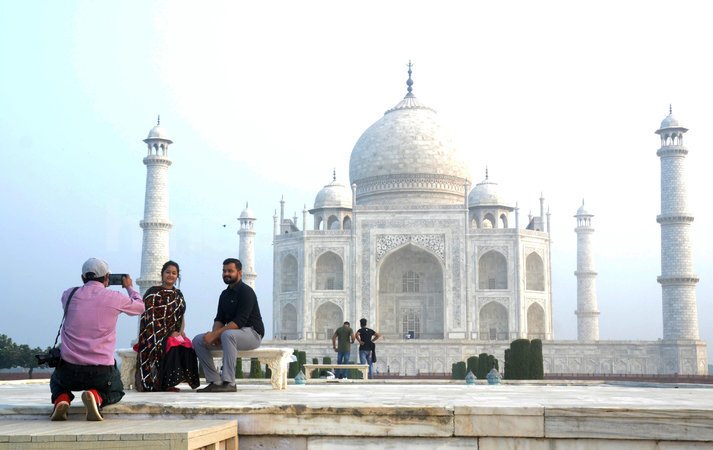
When Is a Good Time for Taj Mahal Photography?
There is no single time that produces the best photograph for everyone.
The appearance of the monument changes with the available light and weather.
Early Morning
An early visit can provide softer light than the stronger sunlight later in the day.
It can also suit visitors who want to begin their sightseeing early.
However, do not assume that an early visit will mean an empty monument. Visitor numbers vary.
Later Morning
As the sun rises, the light becomes stronger.
This can be useful for photographs that emphasise architectural form and detail.
Afternoon
Stronger light can create more noticeable shadows.
If you enjoy architectural photography, those changes can produce different compositions.
Later in the Day
The light changes again as the day progresses.
Your options will depend on the monument’s current visitor hours and rules, so check the official information for your travel date.
Sunrise and Early-Morning Photography
Early morning is often considered when planning a photography-focused Taj Mahal visit.
If you want to arrive early, make sure you understand the current entry arrangements before travelling.
Do not rely on an old blog post for opening information because visitor procedures can change.
The Archaeological Survey of India provides visitor information for the Taj Mahal and other monuments in the Agra area.
Smartphone Photography at the Taj Mahal
A smartphone is capable of producing useful travel photographs without complicated settings.
Clean the Lens
A fingerprint or small amount of dust can reduce clarity, particularly when photographing bright areas.
Use the Standard Camera
The normal camera setting is often a practical starting point.
Be Careful With Digital Zoom
Heavy digital zoom can reduce image quality. If you can safely and legitimately change your position, consider doing that instead.
Try Different Framing
Take one wide photograph and another that concentrates on the architectural details.
Check the Background
Before taking the picture, look around the edges of the frame.
A small change in position can remove a distracting object or person.
Camera Photography Tips
If you bring a dedicated camera, you can concentrate on the same fundamentals rather than relying on complicated equipment.
Consider:
- Available light
- Exposure
- Shutter speed
- Focal length
- Composition
- Background
- Subject position
A wider focal length can help when you want to include more of the surroundings.
A longer focal length can be useful for details, depending on your equipment and the permitted photography conditions.
The equipment you already own may be enough.
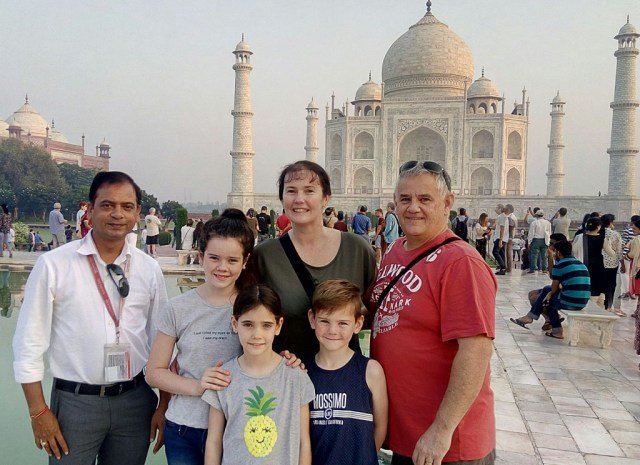
Taking Portraits With the Taj Mahal
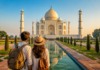
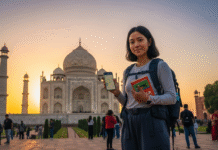
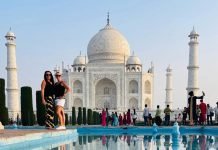
Many visitors want photographs of themselves with the monument in the background.
For a simple portrait:
- Leave enough space around the person.
- Position the Taj Mahal clearly in the background.
- Try both a wider environmental portrait and a closer photograph.
- Avoid blocking walkways.
- Do not interfere with other visitors.
- Respect people who do not want to be photographed.
You do not need complicated posing. A natural photograph often records the visit better than a heavily staged one.
Taj Mahal Photography Rules
Photography must follow the rules applying to the monument.
According to the Archaeological Survey of India, photography is permitted at protected monuments, while camera stands, additional lighting and similar equipment require authorization.
The ASI’s Agra visitor information also lists items that are not permitted at the Taj Mahal, including drones and certain large bags.
Therefore:
- Follow security instructions.
- Do not bring prohibited equipment.
- Do not assume professional equipment is automatically allowed.
- Ask staff if you are unsure about an item.
- Follow the photography restrictions applying to the area you enter.
The official rules should always take priority over information published on travel websites.
Can You Bring a Tripod?
Do not assume that you can simply enter with a tripod.
The ASI states that camera stands, additional lighting and similar equipment require authorization.
If you need specialist photography equipment, check the current requirements and obtain the necessary permission before your visit.
For ordinary holiday photography, a handheld camera or smartphone is simpler.
Can You Fly a Drone at the Taj Mahal?
Do not plan your Taj Mahal photography around aerial drone images.
The Archaeological Survey of India’s visitor information lists drones among the prohibited items for the Taj Mahal.
Follow the official rules rather than attempting to use equipment that is not permitted.
Photography Inside the Mausoleum
Photography rules can differ between areas of a monument.
Do not assume that a general statement saying “photography is allowed” means that every interior space has identical conditions.
Follow the instructions given by monument staff while visiting the mausoleum and other restricted areas.
Simple Equipment for a Taj Mahal Visit
For most visitors, there is no need to carry a large photography kit.
A simple setup may be:
- Smartphone or camera
- Extra battery, where appropriate
- Lens-cleaning cloth
- Necessary personal documents
- Ticket or booking information
Keep your equipment practical.
The ASI’s visitor information lists large bags and briefcases among the items restricted at the Taj Mahal, so check the current requirements before arriving.
A Different Way to Photograph the Taj Mahal
Instead of taking ten photographs from almost the same position, try building a small visual sequence:
Gateway → Full monument → Architectural detail → Garden → Portrait → Different viewpoint
This gives you photographs showing:
- Where you were
- What you saw
- How the monument is designed
- The details you noticed
- Your experience as a visitor
It also makes your photographs less repetitive.

Visiting With a Guide
A guide is optional for Taj Mahal photography.
However, understanding the architecture can change what you notice while taking photographs.
A guide can explain subjects such as:
- Mughal architectural design
- Marble inlay
- Decorative elements
- The layout of the complex
- Historical context
- Features of the surrounding buildings
If you want dedicated guiding during your visit, see our private Taj Mahal and Agra guide service.
The guide service and photography equipment are separate considerations unless your booking specifically combines them.
Using a Cab for a Photography-Focused Day
If you want to photograph several locations around Agra, private transportation can make it easier to move between your agreed stops.
Before booking a cab, confirm:
- Pickup point
- Drop-off point
- Vehicle
- Number of passengers
- Luggage
- Current fare
- Waiting arrangements
- Planned sightseeing locations
For transportation information, see our private cab transportation for Taj Mahal visits.
The transportation service does not automatically include a guide or photography service unless that is specifically agreed.
Planning Your Photography Itinerary
If photography is one of your main interests, avoid trying to visit too many places in one day.
A simple plan could be:
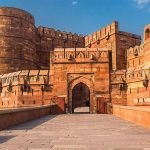
Taj Mahal → Agra Fort → another photography location if time permits
If you want to include Mehtab Bagh, allow time for the additional journey and visit.
For broader Agra planning, see our Agra itinerary and sightseeing planning guide.
Your actual schedule should depend on your travel date, visitor arrangements and onward plans.
Taj Mahal Photography From Delhi
A photography-focused visit from Delhi requires additional planning because the Delhi–Agra journey uses part of the day.
If you are travelling to Agra and returning to Delhi on the same day, decide which photography locations matter most to you.
For travel planning, our Delhi to Agra route and distance information can help you understand the journey.
Leave enough time for traffic and your return plans.
Frequently Asked Questions
Is photography allowed at the Taj Mahal?
Photography is permitted subject to the monument’s current rules. The ASI states that camera stands, additional lighting and similar equipment require authorization.
Can I take photos with my phone?
Yes, a smartphone is a practical choice for ordinary travel photography, subject to the current visitor rules.
Can I take a professional camera?
A camera can be used subject to the applicable monument rules. Additional equipment may require authorization.
Can I bring a tripod?
Do not assume that a tripod is allowed. The ASI states that camera stands and similar equipment require authorization.
Can I use a drone?
The ASI’s visitor information lists drones among prohibited items at the Taj Mahal.
What is the best time to photograph the Taj Mahal?
It depends on the light and the type of photograph you want. Early morning provides different conditions from later morning or afternoon.
Is sunrise photography possible?
You can plan an early visit, but check the current opening and entry arrangements before travelling.
Where can I photograph the Taj Mahal from outside?
Mehtab Bagh is an established viewpoint across the Yamuna. Check its current visitor information before planning your visit.
Do I need an expensive camera?
No. A smartphone can be sufficient for many travel photographs.
Can I take photographs with the Taj Mahal behind me?
Personal photographs can be taken subject to the monument’s rules. Avoid blocking pathways and respect other visitors.
Is a photography guide necessary?
No. A guide is optional. A guide can, however, explain the architecture and history behind the details you are photographing.
Practical Taj Mahal Photography Checklist
Before leaving for the monument, check:
- Current visitor information
- Current photography rules
- Camera or phone battery
- Lens cleanliness
- Ticket or booking information
- Prohibited-item list
- Planned photography locations
- Available sightseeing time
- Transportation arrangements
Keeping the checklist simple can prevent avoidable problems during your visit.
Final Advice for Taj Mahal Photography
You do not need an elaborate photography setup to document your visit.
Start with the basics:
Choose your time → find a good viewpoint → check your composition → photograph the architecture → try a different perspective.
Take some photographs of the complete monument, but also look at the smaller architectural details.
Most importantly, follow the current visitor rules and give yourself enough time to experience the Taj Mahal rather than spending the entire visit looking through a screen.
If you are visiting Agra with a private guide or cab, agree on the itinerary and services before your trip so there is no confusion about what is included.
About This Guide
This article is intended as a practical guide to photographing the Taj Mahal and planning photography-focused sightseeing in Agra.
Information about monument rules and visitor procedures can change. Official Archaeological Survey of India information should take priority when planning your visit.
Guide: [Your Real Name]
Location: Agra, Uttar Pradesh, India
Last updated: [Actual date]